If you have heard marketers talk about "sales funnels" and wondered what they mean, the basic idea is simple.
A sales funnel is a series of steps that helps move a person from first discovering an offer toward taking an intended action. That action may be buying a product, booking a service, signing up for a trial or becoming a lead.
Every business already has a funnel, whether it is planned or not. Understanding it helps you make the path clearer for the people you want to reach.
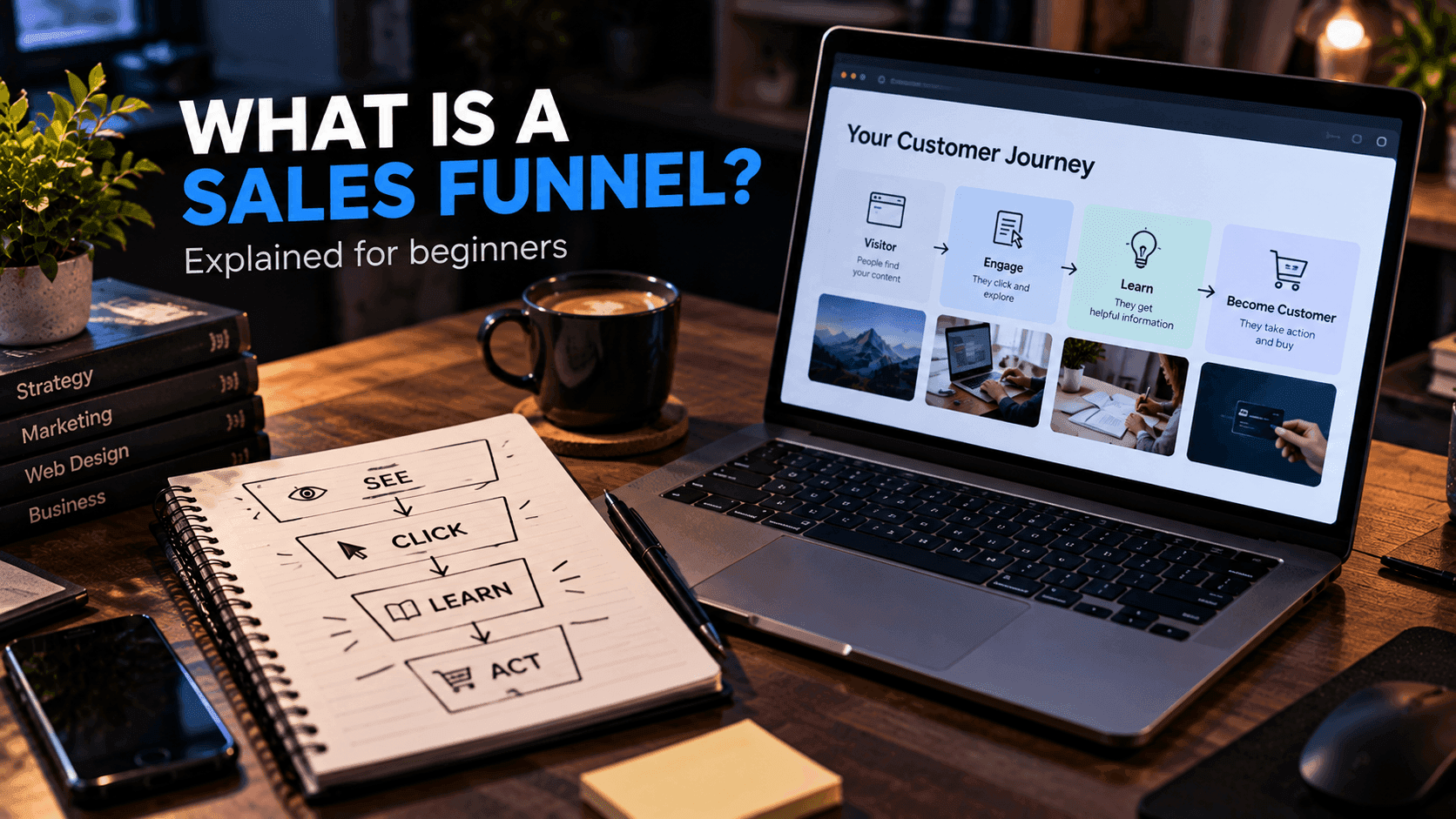
Quick answer: A sales funnel is the path from discovery to action. People discover you, become interested, compare options, take an action and, if they are not ready yet, receive follow-up. It is called a funnel because fewer people continue at each step.
Why Is It Called a Funnel?
At the beginning, many people may see your content or advertisement.
Only some of them click.
A smaller number read your offer.
Some of those people submit a form or make a purchase.
The number of people decreases at each stage, which is why the concept is drawn as a funnel: wide at the top, narrow at the bottom. That shape is normal. The goal is not to get everyone to the bottom, but to make sure the right people are not lost along the way because of confusion or friction.
A Simple Example
Imagine a freelance designer promoting a website package.
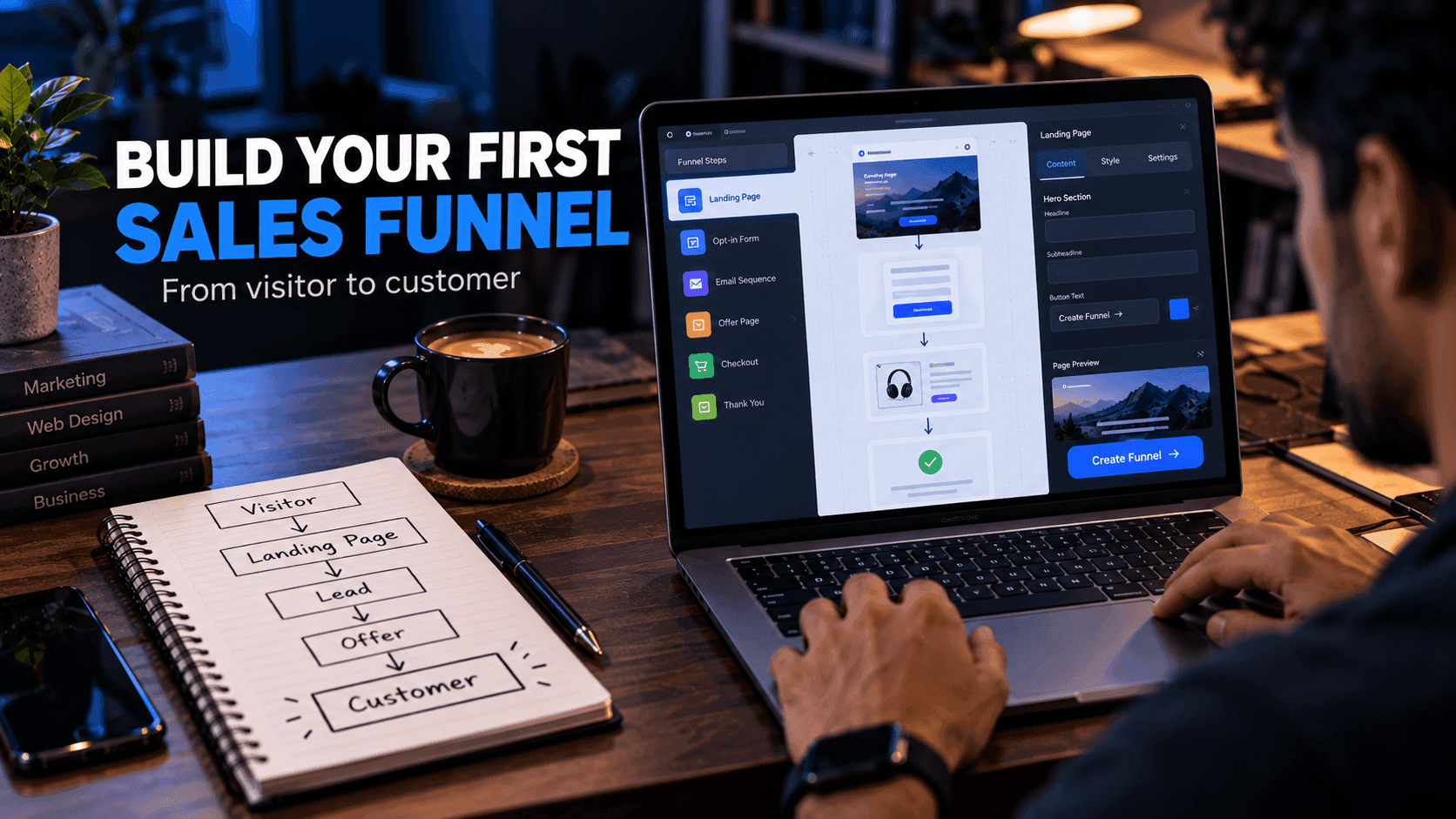
The process could be:
Social media post
↓
Landing page
↓
Portfolio and offer
↓
Contact form
↓
Consultation
↓
Client
Every step has a purpose. The post creates awareness, the landing page explains the offer, the portfolio builds confidence, the form makes contact easy and the consultation answers remaining questions.
The Main Stages
1. Awareness
A person discovers you through:
- Search engines
- Social media
- Advertising
- YouTube
- Referrals
- Blog content
The objective is to attract people who may actually need what you offer. Reaching the wrong audience fills the top of the funnel without producing results further down.
2. Interest
The person visits your website or landing page.
Now you need to explain the problem and your solution clearly. A focused page with a specific headline works better here than a general homepage. If you are deciding between the two, see landing page vs website.
3. Consideration
The visitor compares options and looks for evidence that your offer fits their needs.
Useful information can include:
- Features
- Pricing
- Real examples or previews
- FAQs
- Documentation
- Demonstrations
Honest, specific information is more persuasive at this stage than big promises.
4. Action
The visitor performs the desired action.
Examples:
- Purchase
- Signup
- Booking
- Download
Make this step as easy as possible: short forms, a clear checkout and no surprise costs.
5. Follow-Up
For leads who are not ready immediately, follow-up keeps the relationship active. Email is one common method, because people have chosen to hear from you and can read at their own pace.
Follow-up also matters after a purchase. Onboarding emails, useful tips and support information help customers get value from what they bought.
Funnels Are Not Only for Products
A funnel can be useful for many business models.
Freelancers
Visitor → Portfolio → Consultation → Client
SaaS
Visitor → Product page → Free trial → Paid plan
Creators
Visitor → Free content → Email list → Digital product
Local businesses
Visitor → Service page → Inquiry → Appointment
Template and resource sites
Visitor → Free template → Email signup → Premium template
The steps change, but the pattern is the same: help the right person take the next sensible step.
Website vs Funnel
A website is usually broader. A funnel is more focused on a specific journey.
For example, your website might have twenty pages covering services, blog posts, documentation and company information. A campaign funnel might contain only three or four important steps, each designed for one purpose.
The two work well together. Your website builds a long-term presence, while funnels handle specific campaigns and offers.
Do You Need Special Software?
No. You can technically build a funnel using separate technologies.
For example:
- HTML or React for pages
- A backend for forms
- An email service
- A payment provider
- Analytics
However, managing multiple systems takes time, and each connection is another thing that can break.
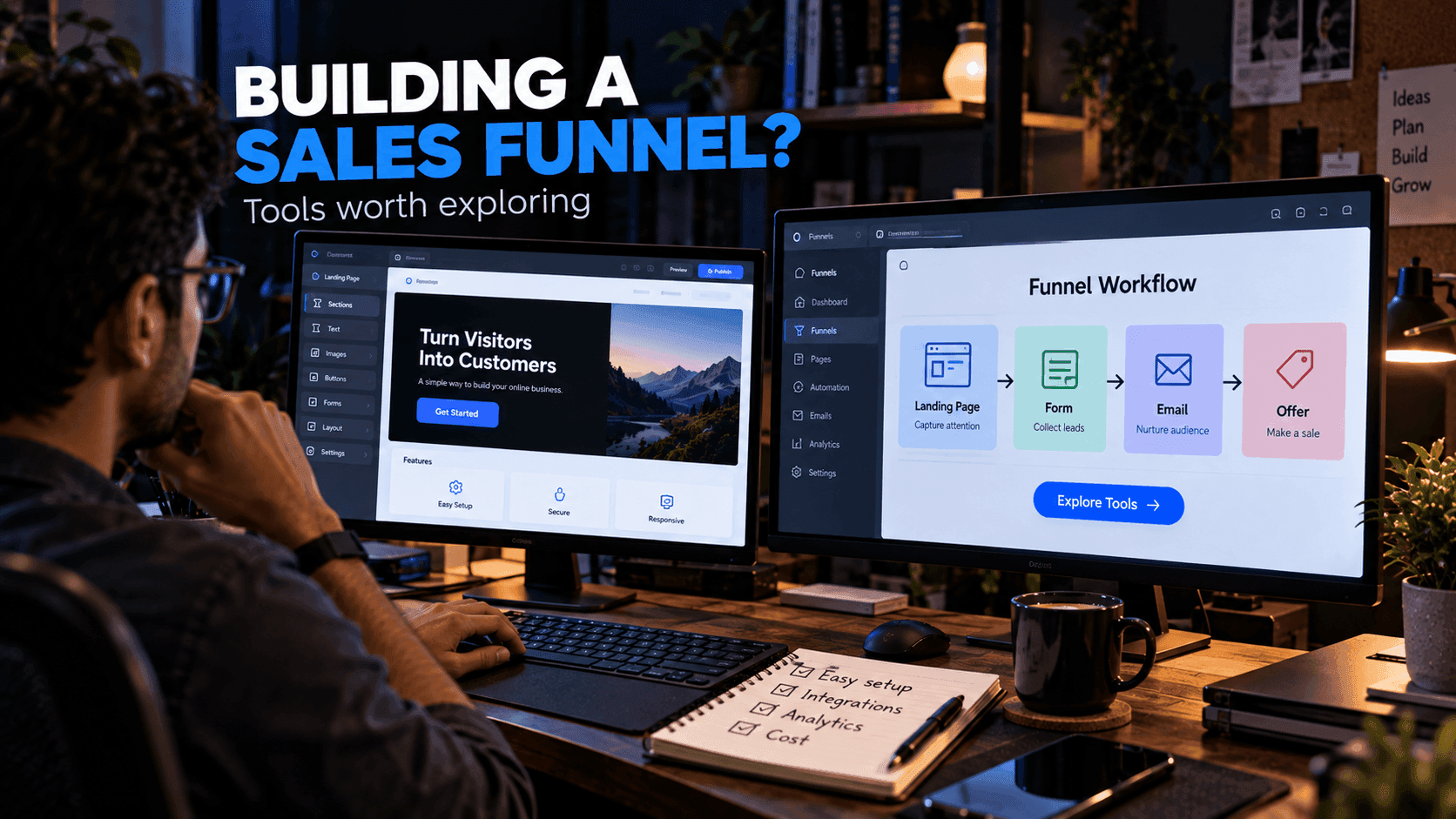
Platforms such as systeme.io combine several of these functions, including pages, funnels, email and checkout. If that approach interests you, see our systeme.io sales funnel guide, or compare approaches in our article on the best tools for building sales funnels.
What Makes a Funnel Useful?
A useful funnel should be:
- Relevant: each step matches what the visitor expects
- Easy to understand: one clear action per page
- Mobile friendly: usable on a phone from start to finish
- Fast: pages load quickly
- Transparent: pricing and terms are clear
- Measurable: you can see where people stop
The goal is not to manipulate visitors. It is to make the customer journey clear and remove unnecessary friction.
How to Map Your Current Funnel
Even if you have never built a funnel on purpose, you can map the one you have:
- List where people first find you.
- Note the first page they land on.
- Write down what you want them to do next.
- Follow the path yourself, on your phone, as if you were a new visitor.
- Note every point where you felt unsure what to do.
Those points of uncertainty are where to start improving. When you are ready to build a new one, follow our step-by-step guide on how to create a sales funnel.
Frequently Asked Questions
What is a sales funnel in simple terms?
A sales funnel is the series of steps a person takes from first discovering your offer to taking an action, such as signing up, booking a call or making a purchase.
What are the stages of a sales funnel?
A common model uses awareness, interest, consideration and action, followed by follow-up for people who are not ready yet. Different businesses name and group these stages differently.
Why is it called a funnel?
Because the number of people usually gets smaller at each step. Many people may see your content, fewer click, fewer still read the offer and a smaller group takes the final action.
Is a sales funnel the same as a website?
No. A website covers many topics and lets visitors explore. A funnel is a focused path of a few pages built around one specific goal.
Do I need special software to build a sales funnel?
No. You can connect separate tools for pages, forms, email and payments. Funnel builders and all-in-one platforms simply make it easier to create and manage those steps in one place.
Final Thoughts
A sales funnel is not a mysterious marketing trick. It is simply a structured path from discovery to action.
Start small. Define the audience, choose one goal and create the shortest useful journey between the two.
Related reading:
- How to Create a Sales Funnel: Step-by-Step
- Best Tools for Building Sales Funnels
- Landing Page vs Website
- systeme.io Sales Funnel Builder Guide
Disclosure: FreeDevTemplates may earn a commission if you sign up for systeme.io through links on our guide pages, at no additional cost to you. Read our affiliate disclosure.